 Skip to content

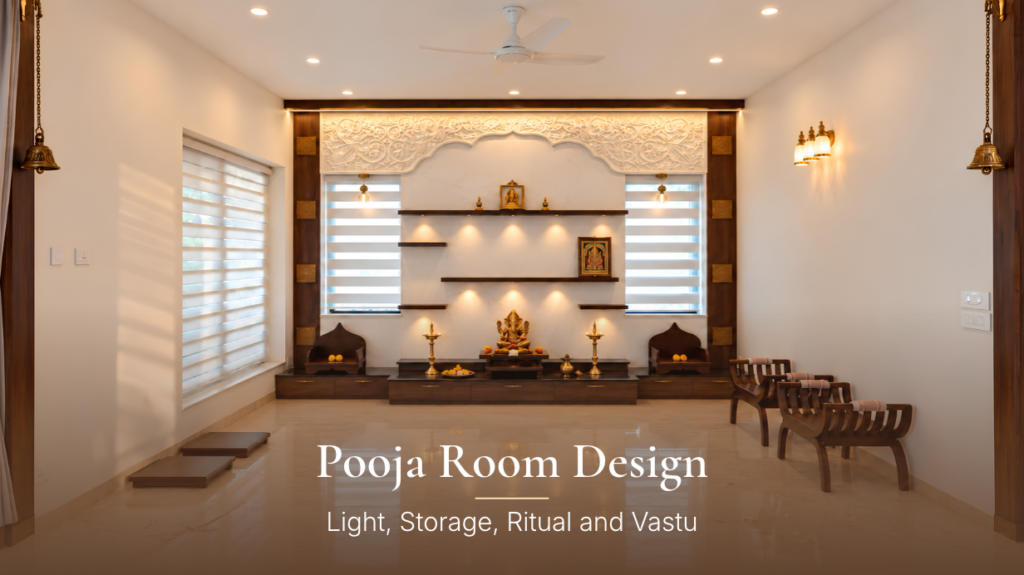
In many homes, the pooja space begins with a simple request: “We need a place for the mandir.” But the conversation soon becomes more personal. Which deities will be placed there? Who performs the daily pooja? Are lamps lit every morning? Does the family gather there during festivals?
These details shape the space long before we think about finishes or decoration.
A thoughtful pooja room design begins with these rituals. It considers how the space is used, what it needs to hold, and how it can feel calm, meaningful, and naturally connected to the rest of the home.
How should a pooja room design begin?
Before deciding on marble, woodwork, or decorative panels, we begin with the family’s routine and the way the space will actually be used. Some homes need a compact niche for a few quiet minutes each morning, while others need enough room for several people, festival arrangements, ceremonial items, and occasional gatherings.
The size of the mandir, number of idols, style of worship, and frequency of use all help guide the layout. We also look at how people will sit, stand, move around the space, and access the items they need during prayer.
A practical pooja room design gives each ritual enough space without making the room feel crowded. It should feel comfortable to use, easy to keep organised, and simple to maintain over time.
Where should a pooja room be placed?
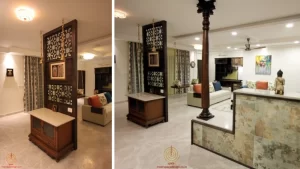
The right location depends on the home’s layout, available space, and the family’s beliefs and preferences. A dedicated room may offer more privacy, while a thoughtfully planned niche can work equally well in an apartment.
For families who follow Vastu, direction and orientation can strongly influence where the pooja space is planned. We take these requirements into account from the beginning and study them alongside natural light, access, available space, and the larger layout of the home.
The space should also allow enough room to sit, stand, open shutters, light lamps, and arrange offerings comfortably.
How can light shape the pooja space?

Natural light can bring warmth and calm to a pooja room design, especially during morning rituals. A nearby window, filtered glass or a softly lit screen can create a gentle atmosphere.
Artificial lighting should be layered. A warm ambient light can illuminate the room, while focused lighting can highlight the deity or backdrop. Concealed lights work best when their source remains subtle.
Oil lamps, candles and incense also require careful planning. They should sit on stable, heat-resistant surfaces with space around them.
The London Fire Brigade’s guidance on candles, incense and diya lamps also recommends using stable, heat-resistant holders, keeping flames away from materials that can catch fire, and extinguishing them before leaving the room.
What storage does a pooja room need?

A functional pooja room design should make space for all the small things used during everyday worship, from incense, matchboxes, prayer books, lamps, oil, wicks, and flowers to vessels and festival decorations.
Frequently used items can sit in shallow drawers close to the mandir, while larger ceremonial objects may need deeper storage below or in a nearby cabinet. Prayer books and smaller sacred items benefit from a clean, dry shelf where they are easy to reach without being left out in the open.
Storage works best when it feels like a natural part of the room rather than something added later. Closed cabinets can keep supplies organised and out of sight, while a small open ledge can hold the items used in the daily ritual. The aim is to keep the space calm and uncluttered while making everything needed for worship easy to access.
Which materials work well in a pooja room?
 Two hand-carved marble panels, one framed by wooden pillars, the other paired with brass, showing how stone, wood, and metal can share a single space.
Materials should suit the home while remaining comfortable to clean and maintain over time. Wood can bring warmth, stone can give the space a calm, grounded feel, and metal details can add a more traditional touch.
Intricate jaali panels, carved shutters, and decorative backdrops can all add character, but we prefer to use them with restraint so the room does not feel visually heavy. The materials should support the atmosphere of the pooja space rather than compete with it.
A well-considered pooja room design also takes everyday use into account. Incense residue, lamp oil, flower offerings, and regular cleaning are all part of the space. Smooth surfaces, accessible corners, and finishes that are easy to care for can make the room feel more comfortable to use every day.
How should Vastu influence pooja room design?

When Vastu is important to the family, we treat it as an integral part of the design brief, not as an afterthought.
You may need to consider the direction, orientation, placement of the mandir, and its relationship with other areas of the home. Some families follow specific Vastu principles for elements associated with fire, water, storage, or heavier objects.
Our role is to understand these beliefs clearly and work with them alongside lighting, ventilation, materials, storage, and the architectural possibilities of the home. This allows the pooja room design to respect the family’s practices while still feeling thoughtfully integrated into the overall space.
What makes a pooja room feel personal?

A pooja room becomes meaningful through the objects, memories, and rituals it holds. An inherited idol, a brass lamp from a grandparent’s home, a prayer book used for years, or framed photographs placed during worship can give the space a character that no finish or decorative feature can create on its own.
These details are what make the room feel both familiar and personal. The design simply gives them the right setting, so the space feels calm, considered, and inviting to return to every day.
At Inner Space, we believe a pooja room should feel like a space the family naturally returns to. It should hold the rituals, memories, and objects that matter to them, while still feeling like a true part of their home.
If you are planning a pooja space as part of your home, explore our approach to turnkey interior design for personalised homes, or get in touch with us to discuss how we can shape the space around your family and the way you live.
Found this article helpful? Share it with someone planning their home.
Frequently Asked Questions
