 Skip to content


When two people plan a home together, their references don’t always point in the same direction.
One set of images feels warm, layered, and full of character. Another feels quieter, cleaner, and more restrained. At first, the gap between the two seems wider than it really is.
For us, this is where the conversation becomes interesting.
The difference is rarely just about furniture, colour, or finishes. Behind those references are ideas about comfort, familiarity, calm, and personality. Once we understand what each person is responding to, the question changes from “Which style should we choose?” to “What should this home feel like?”
That is where eclectic interior design becomes meaningful. It gives different influences room to exist together while still allowing the home to feel complete.
Do You Really Want Two Entirely Different Homes?
Style labels make preferences sound more fixed than they are.
Minimal. Traditional. Modern. Contemporary. They give us a useful starting point, but they rarely tell the whole story. A minimal reference may actually be about visual calm rather than an empty room. The appeal of a traditional interior may lie in its warmth, familiar materials, or the feeling of things collected over time. So the conversation gradually moves away from labels. We begin to talk about how the home should feel.
Calm. Warm. Relaxed. Layered. Light. Grounded.
These words give us far more to work with. They also reveal connections that were not obvious when we were simply comparing two very different mood boards.
What Does Eclectic Interior Design Mean to Us?
Once those preferences become clearer, the next question is how they belong in the same home. Eclectic interior design brings together different styles, periods, materials, colours, and influences in a considered way. It does not depend on everything matching. What matters is that the different elements feel related.
That connection comes through colour, material, scale, texture, proportion, and composition.
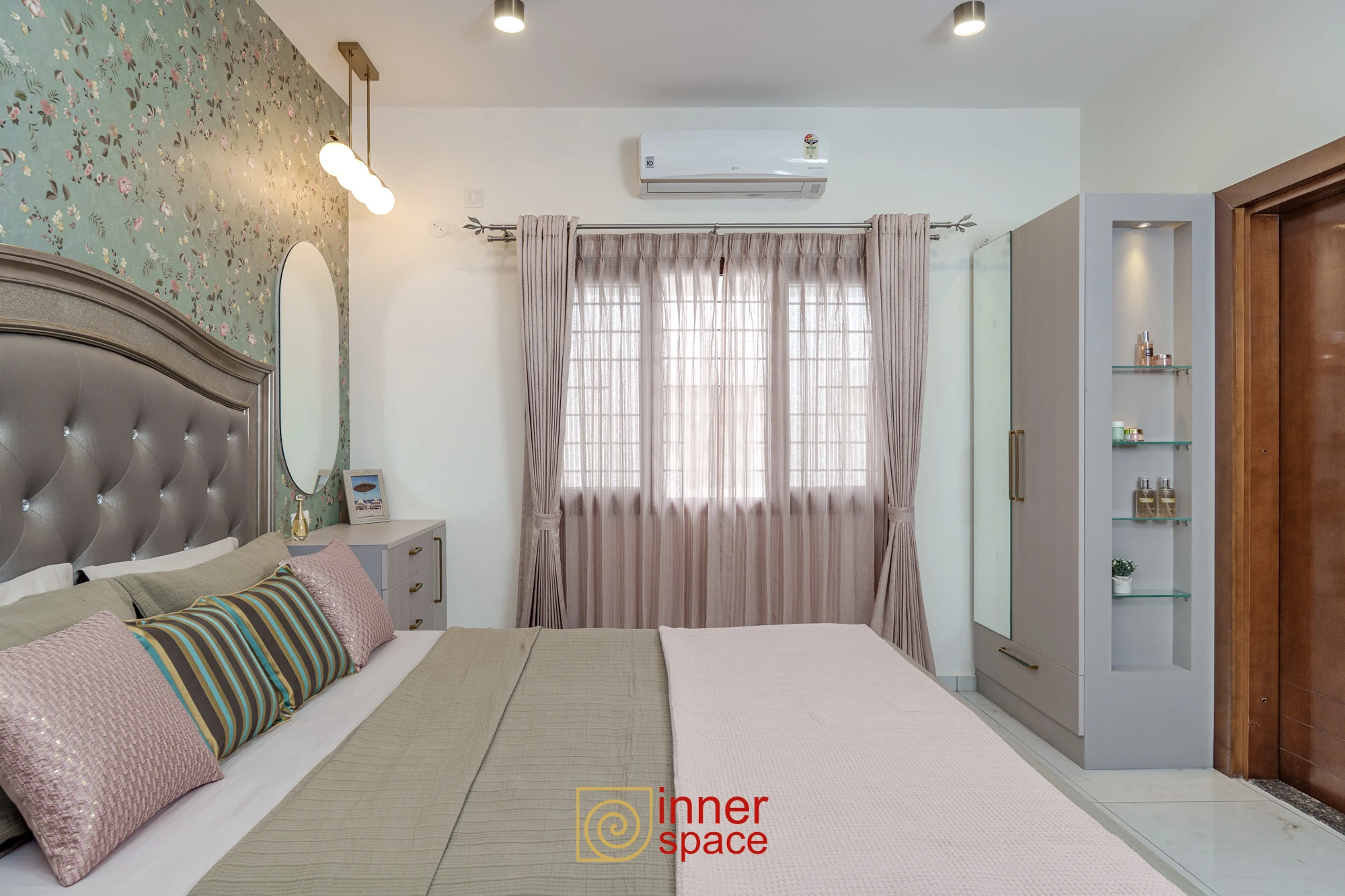
The room still holds contrast. In fact, that contrast is part of its character. The difference is that nothing feels placed there without thought.
For us, this is what separates an eclectic interior from a room filled with unrelated ideas. There is variety, but there is also a clear sense of order.
Architectural Digest explores a similar approach, looking at how contrasting styles are brought together through colour, texture, furniture, and finishes rather than through exact matching.
Do We Need to Use Everything We Like?
Once a direction begins to emerge, editing becomes just as important as choosing.
We treat inspiration as a way of understanding preferences, not as a list of things that need to appear in the final home.
One reference might stand out because of its colour. Another might be about the atmosphere or material. In many cases, it is one detail within the image that matters rather than the room as a whole. As the design develops, the stronger ideas stay. The rest gradually becomes less relevant. That editing is especially important in eclectic interior design, where several influences are already coming together. Adding more does not automatically add more personality. A little restraint gives the important choices room to be seen.
Does Everything Need to Be a Compromise?

Once the unnecessary ideas fall away, the real differences become much easier to see.
This is where compromise tends to enter the conversation. But meeting exactly in the middle does not always create the strongest home.
Two strong preferences can lose their character when both are softened too much.
We would rather understand how the contrast itself contributes to the room.
A bold choice feels more considered when it has space around it. An older piece gains a different kind of presence in a contemporary setting. A restrained background gives more expressive details room to stand out. The aim is not to make two preferences look alike. It is to give each enough space to belong without competing for attention.
That creates a much more interesting balance.
How Do We Keep Eclectic Interior Design Cohesive?
Once different influences find their place, the next challenge is making the home feel connected.
That connection does not need to be obvious.
A familiar timber tone carried through different rooms creates continuity. Repeating a metal finish in small details builds another quiet link. Colour works in the same way when it appears with different intensity across the home.

These threads help eclectic interior design feel settled rather than scattered.
Scale and proportion bring another level of balance. Furniture from different design languages sits more comfortably together when the overall visual weight feels right.
The architecture also gives the home a steady foundation. Flooring, doors, built-in elements, lighting, and larger finishes create consistency while leaving room for more individual choices.
Every room still has its own character. The connection comes from the feeling that they all belong to the same home.
Should Every Decision Be Joint?
Once the larger direction is settled, smaller decisions don’t need the same level of negotiation.
Some choices shape the entire home. Others belong more personally to the people living there. We like that distinction. Books collected over the years, artwork chosen for personal reasons, a favourite chair, or a corner used in a particular way give the home a life beyond the overall design scheme.
If every detail is perfectly coordinated, something personal can get lost along the way. A shared home still needs room for individual choices.
This matters even more when space is limited. Our guide to small space interior design looks at how one space supports different needs without feeling crowded.
What Happens When One Voice Is Stronger?
Not everyone enters the design process with the same clarity.
One person may arrive with pages of saved references, while the other has only a handful of clear reactions.
Both are valuable. A simple response such as “this feels too formal” or “this room feels too busy” already tells us something useful. Nobody needs design vocabulary to know when a space feels right or wrong.
The important part is listening closely enough to understand those reactions.
That way, the finished home does not become a reflection of whoever arrived with the most detailed mood board. Both points of view still find their place in the final design.
Can Different Tastes Make a Home More Personal?
By this stage, differences in taste no longer feel like a problem to solve. They become part of the home’s identity. A shared home carries more than one perspective. New pieces sit alongside things that already have a history. Quieter areas give way to more expressive moments. Personal objects bring familiarity to spaces that were designed from the beginning. The result feels layered because it has grown from more than one way of seeing the home.

That is what we find most interesting about eclectic interior design.
The mix itself is not the point. What matters is that the different influences eventually stop feeling separate. They begin to belong to the same story.
How Does Inner Space Bring Different Preferences Together?
At Inner Space, a shared home begins with understanding both points of view.
We look at what matters most, where the preferences naturally connect, and where each person has room to bring something of their own.
From there, the home starts to develop an identity that belongs to neither person alone.
The final space does not need to look exactly like either original inspiration folder. In fact, we see that as part of the process. Both perspectives have shaped something new.

For us, that is what a shared home should ultimately feel like: personal, balanced, and true to the people living there.
If you are planning a home together and bringing different tastes into the conversation, get in touch with Inner Space to explore how those ideas can come together.
